
AKD: Lack of Ship Definition Threat to Investors
Post date: 27.03.2015 , Views: 147
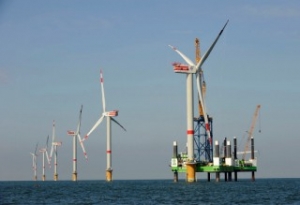 zoom Rotterdam-based law firm AKD says that the lack of an unambiguous term to describe a ‘ship’ in several jurisdictions represents a potential threat to asset security for financiers, particularly in the offshore and renewable energy sectors. “In many jurisdictions, including the US and the UK, there appears to be no clear definition of a ship. A recent Tulane Maritime Law Journal study illustrated how a variety of floating objects which have no means of propulsion and/or ability to carry cargo or passengers cannot easily be registered as a ship. FPSOs and MODUs, but also FTUs for offshore wind farms, fall into this category, AKD partner Haco van der Houven van Oordt says. Haco van der Houven van Oordt As a result, securing asset finance for such units, the value of which can run into millions and even billions of dollars, may be problematic in many countries. Because the units are not ships, they cannot be entered in a ship registry, and no security such as a ship mortgage can be recorded, he adds. “In the Kingdom of the Netherlands, including the Dutch Caribbean, it is a different story. These jurisdictions clearly define ships as ‘all objects which, according to their construction, are destined to float and which float or have done so’. There is no requirement for propulsion, and no need to demonstrate the ability of a unit to navigate and/or to carry cargo or passengers. All floating offshore structures can therefore be registered there.” Attempts to establish a definitive categorisation of the term ‘ship’ in various jurisdictions have historically led to confusion and litigation. “This clearly is not acceptable to the financiers of the sorts of high-value, technologically advanced units operating in today’s offshore and renewable energy sectors. Lenders should be aware of the alternative and obtain a security right over floating units which are registered in the Kingdom of the Netherlands,” notes AKD partner Carel van Lynden.