
First Offshore Ship Gets DNV GLs Shore Power Class Notation
Post date: 01.09.2017 , Views: 363
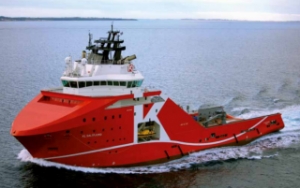 K Line Offshore KL Sandefjord, owned by K Line Offshore AS, a subsidiary of Japans Kawasaki Kisen Kaisha (K Line), has become the first offshore vessel with the DNV GL class notation Shore power. This notation verifies the design and installation of a vessel’s on-board electrical shore connection. When in port, the vessel can shut down its engines and rely on a shore based electrical supply for its needs at berth – so called cold ironing. “We are very pleased to receive this notation for our anchor handler KL Sandefjord, which reflects our commitment to ensure a cleaner port environment and a more pleasant shipboard for our crew when berthing,” Espen Sørensen, Senior Vice President, Operation and Technical in K Line Offshore AS, commented. “With an on-board shore power installation tested and verified by DNV GL, we now have an offshore vessel equipped for the future We have also decided to apply for the Shore power class notation for the sister vessel, KL Saltfjord,” Sørensen added. By tapping into an onshore electrical supply, vessels not only reduce their fuel consumption, but they also eliminate the associated emissions. This will have a marked improvement on the air quality in the port and surrounding environment, cutting PPM, NOx, SOx and reducing CO2 through the use of more efficient shore based electricity, as explained by K Line. In combination with renewable energy sources, it can even result in zero emission operation for the duration of a vessels stay in port. The use of onshore electrical supply can free the engines for maintenance, and reduces wear and tear, and noise, the company further said. “There is an increasing awareness of the impact of shipping emissions in ports and this is driving investments in cold ironing. This is leading to ports both requiring and incentivizing the use of alternative marine power. In Norway, where KL Sandefjord operates, for example, many ports are also offering a discount for ships with shore power installation, Jon Rysst, Senior Vice President and Regional Manager North Europe, DNV GL, said. As access expands, alongside the rise of fully electric and hybrid vessels, cold ironing could soon become standard procedure in many ports around the world with a noticeable positive impact on air quality,” Rysst concluded. The DNV GL electrical shore connection class rules cover safety requirements for a vessel’s on-board electrical shore connection. The Shore power notation ensures a safe and efficient way of performing the connection and disconnection of shore power by verifying and checking the total system of the electrical shore connection, verifying compatibility between ship and port and provide recommendations for a future proof technical solution.