
LVDT Linear Position Sensors Survive Operation Underwater
Post date: 11.01.2014 , Views: 308
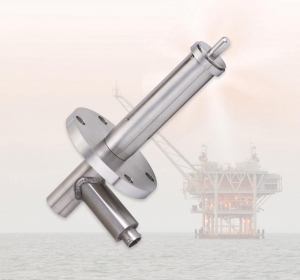 To survive subsea environments, LVDT Linear Position Sensors must be housed in special alloys that support long-term operation in different elements. As a housing and core made from stainless steel will not survive well in many underwater applications, the LVDT casing must be composed of an alloy that provides chemical resistance to seawater and other corrosive acids to provide long-term reliable operations for many years. Reliability is of critically important due to the cost of replacing subsea hardware. Typically, either Inconel or Monel is used, depending upon ocean temperature and depth levels. In shallow warm waters, Monel is ideal as its metal composition resists sea life forming on it. In subsea applications with depths of 7,500 feet and external pressures surpassing 3,500 psi, Inconel offers excellent protection against corrosion due to higher content of nickel, chromium and molybdeumn. These superalloys enhance the already high-reliability of the LVDT assembly, ensuring that it can meet extended service life requirements, even if the device is fully exposed to seawater.
 www.macrosensors.com (As published in the November/December 2013 edition of Marine Technology Reporter - www.seadiscovery.com)