
Ports of Stockholm, Tallinn to Cut Environmental Footprint in Baltic Sea
Post date: 07.05.2014 , Views: 149
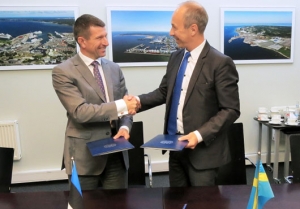
Ports of Stockholm and Port of Tallinn have set high environmental targets for reducing effects on the marine environment in the Baltic Sea. This environmental agreement between two ports is a further step towards minimising the effects of port operations and shipping on the Baltic Sea region.
“We are proud and happy to present our joint collaboration with the Port of Tallinn,” says Johan Castwall, Managing Director of Ports of Stockholm. “Environmental problems are cross-border issues and we are very much looking forward to working together with the Port of Tallinn on these matters.”
“Port of Tallinn has been consistently contributing to various environmental initiatives and such extended cooperation with one of the forerunners in the field of sustainable marine development presents us both great potential in working towards cleaner marine environment of the Baltic Sea,” says Ain Kaljurand, Chairman of the Management Board of Port of Tallinn.
The environmental agreement comprises tangible efforts in three areas:
Liquefied Natural Gas (LNG) as a vessel fuel
Shorepower
Management of Ship-genereated Waste incl. black and grey water
Ports of Stockholm and Port of Tallinn have both actively cooperatedin international maritime organizations such as ESPO ( European Seaport Organization) Sustainable Development Committee and BPO (Baltic Ports Organization) Environmental Committee. The Environmental Agreement between the two port authorities presents a very suitable cooperation framework for the parties to be in the forefront on initiatives aimed at developing the Baltic maritime environment jointly and in a sustainable manner.
Ports of Stockholm has worked in an equivalent way with the Port of Helsinki since 2009 and Port of Turku since 2011. The Port of Tallinn has worked extensively together with the Port of Helsinki with several joint initiatives in several areas, including environmental cooperation projects.
Port of Tallinn, May 6, 2014