
Safe Bulkers Books Bigger Loss in Q1
Post date: 03.06.2016 , Views: 157
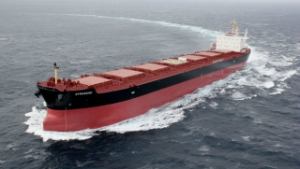 Safe Bulkers Dry bulk owner and operator Safe Bulkers sank further into the red during the first quarter of the year having reported a net loss of USD 17.8 million, almost tripling the loss of USD 6 million posted during the same period in 2015. Adjusted net loss for the first quarter of 2016 was USD 14.4 million as compared to USD 4.6 million, during the same period in 2015. In addition, the companys net revenue for the first quarter of 2016 decreased by 23% to USD 24.7 million from USD 32.1 million during the same period in 2015. We had initiated an operating expenses cost reduction initiative in May 2015, which resulted in substantially lower daily vessel operating expenses, reaching the figure of USD 3,653 for the first quarter of 2016. As a result, in this lowest freight market experienced over the last 30 years, our Time Charter Equivalent rate of USD 6,355 per day is higher than our aggregate daily vessel operating expenses and daily general and administrative expenses of USD 4,854, adding to our liquidity, Dr. Loukas Barmparis, President of the company said. In a separate announcement, Safe Bulkers said that it was notified by the New York Stock Exchange (NYSE) that the company has regained compliance with the NYSEs minimum share price standard for continued listing of its common stock as at the end of May. Safe Bulkers was notified in January that it was not in compliance with the NYSEs listing standard that requires a minimum average closing price of USD 1.00 per share over a period of 30 consecutive trading days. As of May 27, 2016, the companys operational fleet, following two newbuild deliveries and two vessel sales, comprised of 36 drybulk vessels with an average age of 6.3 years and an aggregate carrying capacity of 3.3 million dwt. The bulker owner has contracted to acquire 5 eco-design newbuild vessels, comprised of two Japanese Panamax class vessels, two Japanese Kamsarmax class vessels and one Chinese Kamsarmax class vessel. Upon delivery of all newbuilds the companys fleet will comprise of 41 vessels, 14 of which will be eco-design vessels, having an aggregate carrying capacity of 3.7 million dwt. As of May 27, 2016, the company had liquidity of USD 210.4 million.