
TSA Recommends New Contract Rates
Post date: 02.10.2014 , Views: 216
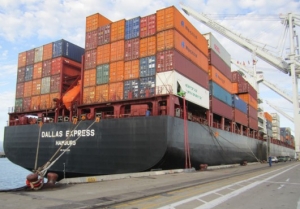 Hapag Lloyds Dallas Express (Illustration)
The research and discussion forum said that among the changes adopted by TSA’s 15 member lines are:
On rates, TSA is recommending that its members seek to conclude 2015-16 contract rates, at levels at or above USD 2,000 per 40ft to the West Coast and USD 3,500 to the East Coast from all North Asia ports.
For Southeast Asia, the objective will be to achieve rates at or above USD 2,150 to the West Coast and USD 3,650 to the East Coast.
Intermodal base rates will vary by destination, but as an example TSA is proposing 2015 CY rates to Chicago-area ramps to be at least USD 3,900 from North Asia and USD 4,050 for Southeast Asia.
Member lines have additionally modified TSA’s formula for other equipment sizes with respect to minimum rates. Base rates for 20-foot containers (TEU) will be assessed at 90% of FEU rates.
High-cube FEU base rates, will be charged a premium of at least USD 50 over the 40ft standard rate for West Coast and USD 100 over the 40ft rate for all other destinations. The changes reflect the greater cost impacts from the handling of different container sizes as load and discharge patterns in port become increasingly complex and time-sensitive, TSA said in a release.
“Carriers feel an urgent need in the current market environment to view pricing differently,” said TSA executive administrator Brian Conrad.
“Rate minimums are an effort to better reflect actual costs of service, rather than simply recommending a specific increase to whatever baseline rate is in the tariff based on short-term supply-demand conditions.
Rates will continue to fluctuate with the market according to origin-destination pairs, service requirements, routing and so on, but a common base guideline is essential for lines to maintain basic service levels and, beyond that, expand their offerings based on customers’ needs.”
According to the discussion group, the new recommended contract rates will also be subject to the addition of a low sulfur fuel cost recovery component, which TSA is currently studying and expects to announce in the next several weeks.
This will reflect new MARPOL sulfur oxide emission rules that take effect on January 1 2015, which are expected to result in hundreds of millions of dollars in additional financial impact to carriers.
“We are studying the various fuel components very closely,” Conrad explained.
“The stricter 0.1% emissions mandate, requiring a shift to costlier marine gas oil (MGO), is of special concern because it will hit the trade all at once and no one can predict just yet where prices will settle. That in turn makes it difficult to adapt our existing formula, but we expect to have a clearer picture closer to January 1, in time to announce a charge with the necessary advance notice.”
TSA members include: