
Ultra Large Containers Testing Charter Rates
Post date: 06.08.2014 , Views: 206
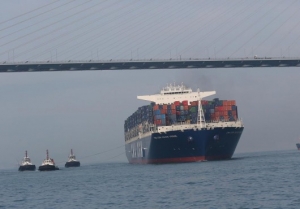
Demand for these huge vessels is higher then ever. July saw 27 newbuild containerships delivered, which is the biggest monthly number since June 2013. The latest newbuilds raise the total number of new container ships to 126, according to the latest data from analyst Alphaliner.
Out of those 27 container ships delivered in July, 7 were ULCVs with a capacity of over 13,000 TEU.
Moreover, seven were ultra-large boxships (ULCVs), each with a nominal capacity in excess of 13,000teu.
And there are yet 95 ULCVs on order, with a total capacity of 1,482,800 TEU, which is more than twice as much compared to the current number of 81 13,000 TEU-plus container ships.
The introduction of new ULCVs will lead to shuffling 8,000 10,000 TEU ships from Asia-Europe trade route, and redirecting them mainly towards transpacific trades, but it also opens up the question of the future of the displaced panamax and post-panamax ships.
According to Alphaliners statistics, the idle containership fleet has decreased to 119, the lowest in past three years, but likely to increase in the second half of the year.
Short- and mid-term charters will also be negatively affected by the proposed 2M vessel-sharing agreement between Maersk and MSC, as well as the purchase of the container activities of CCNI and CSAV by Hamburg Sud and Hapag-Lloyd respectively, leading to a further rationalisation of merged fleets.
Charter rates are bound to feel the heath in the final three months of the year, especially for un-economic panamax ships with low container intakes.
Shipowners and investors have tried to suck up the losses by accepting daily hire rates, which are many times below the operating costs of chartered-out ships, hoping that the market will normalise at some stage.
But this contribution in daily hire will come to an end when the ships are off-hired by ocean carriers in an effort to cut their costs and are laid-up for lack of a fixture, still at a cost but without revenue.
World Maritime News Staff; August 6, 2014; Image: CMA CGM